Theory · Under review, Physical Review D
Scattering amplitudes as quantum walks
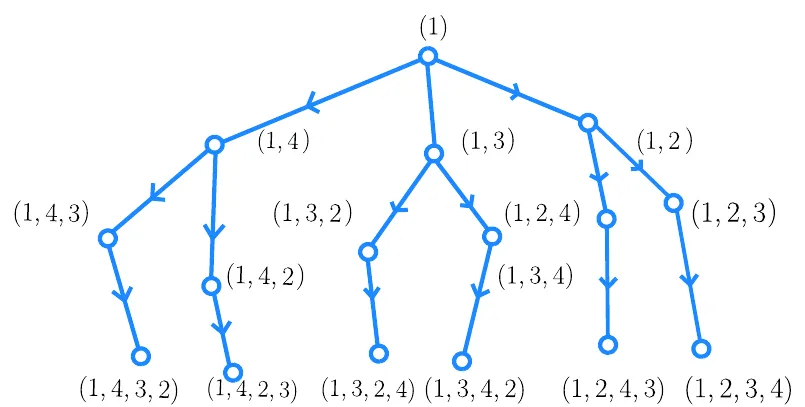
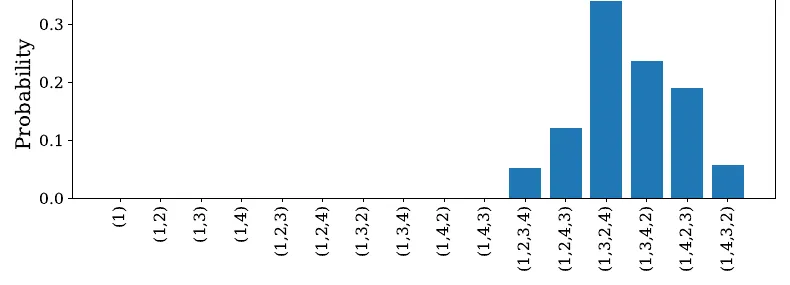
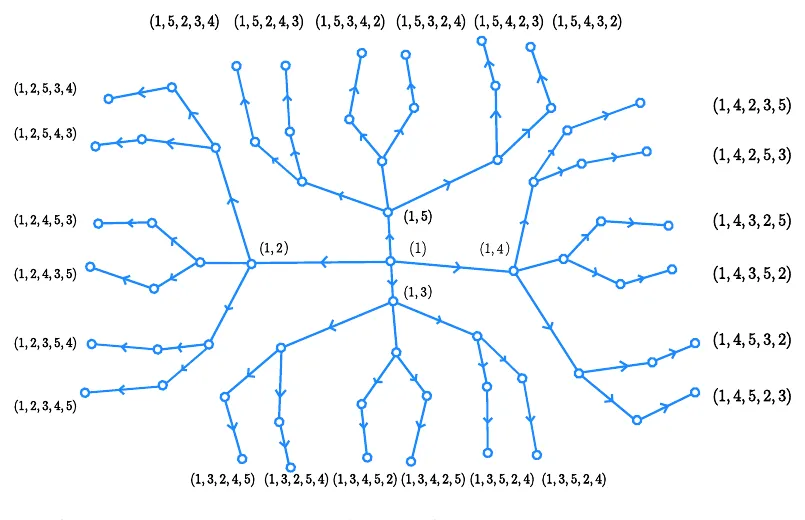
Color-ordered MHV gluon amplitudes represented as coined quantum walks on permutation trees, where each root-to-leaf path is one color ordering.
Project assistant · QOQI Lab, IISc Bengaluru
I work on quantum information, open quantum systems, quantum walks and quantum computing, through photonic experiments, theory and numerical simulation.
I did my BS and MS in physics at IISc Bengaluru and now work as a project assistant in the Quantum Optics & Quantum Information Laboratory. My BS thesis used polarization-entangled photon pairs from spontaneous parametric down-conversion to generate random numbers, certified by a violation of Bell's inequality. For my MS thesis I studied a free fermionic chain under continuous weak monitoring, an open quantum system, and wrote the code that evolves it along quantum trajectories. I have also worked on publicly verifiable quantum random numbers from a four-qubit photonic system, on simulating Popescu–Rohrlich correlations with non-signaling resources, and on a quantum-walk representation of MHV scattering amplitudes for quantum algorithms in field theory.
Jun 2025 – present
Quantum-walk dynamics, PR correlations, scattering amplitudes, quantum tokenized signatures. With C. M. Chandrashekar.
Sep – Dec 2025
Variational and sample-based quantum simulation for chemistry. With Viki Kumar Prasad.
Sep 2024 – Apr 2025
Linear response across the measurement-induced entanglement crossover in free fermions. With Sumilan Banerjee.
Sep 2023 – Apr 2024
Quantum random number generation with polarization-entangled photons. With C. M. Chandrashekar.
May – Jul 2023
Diagnostics, control and data processing for STOR-M tokamak experiments. With Chijin Xiao.
Theory · Under review, Physical Review D
Color-ordered MHV gluon amplitudes represented as coined quantum walks on permutation trees, where each root-to-leaf path is one color ordering.
Experimental · Under review, npj Quantum Information
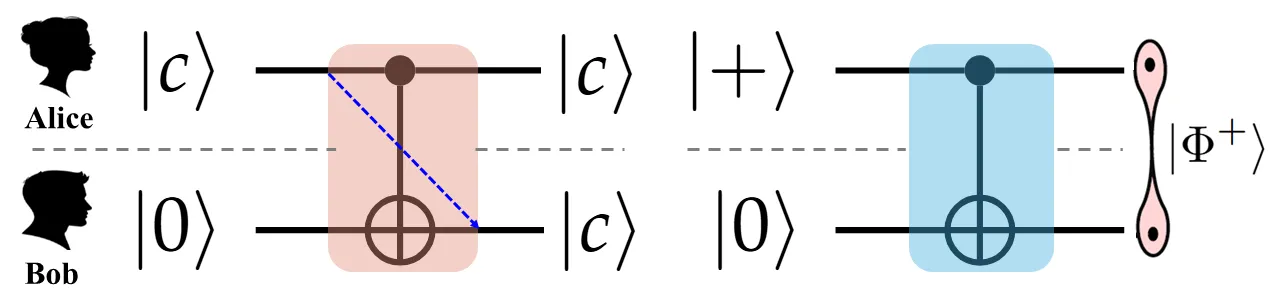
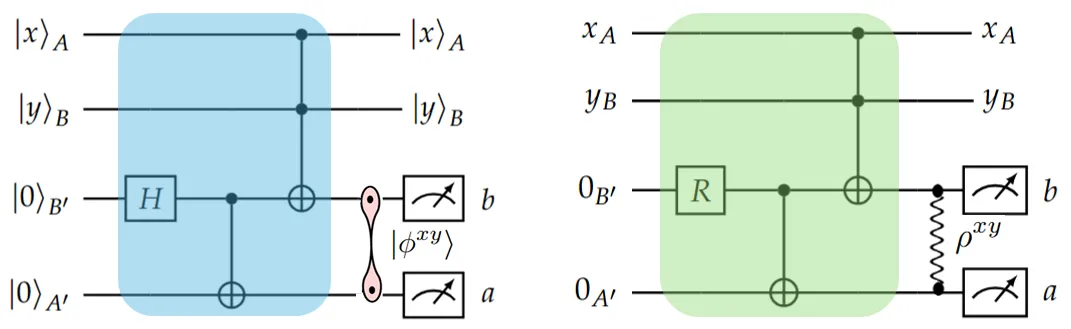
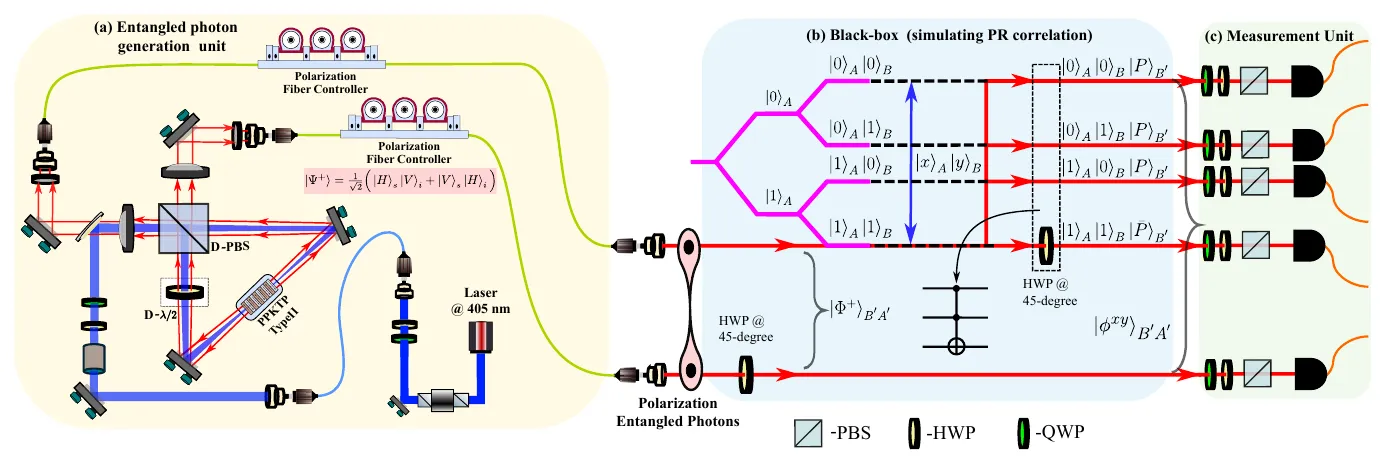
A four-qubit photonic circuit that reproduces Popescu–Rohrlich correlations using a resource that cannot be used to signal.
Experimental · Published
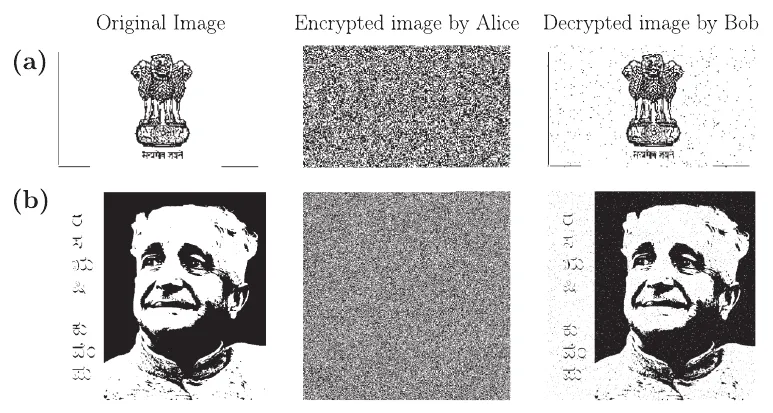
Polarization- and path-entangled photon pairs prepare a four-qubit state whose outcomes can be checked in public while two bit strings stay secret.
Experimental · Sep 2023 – Apr 2024
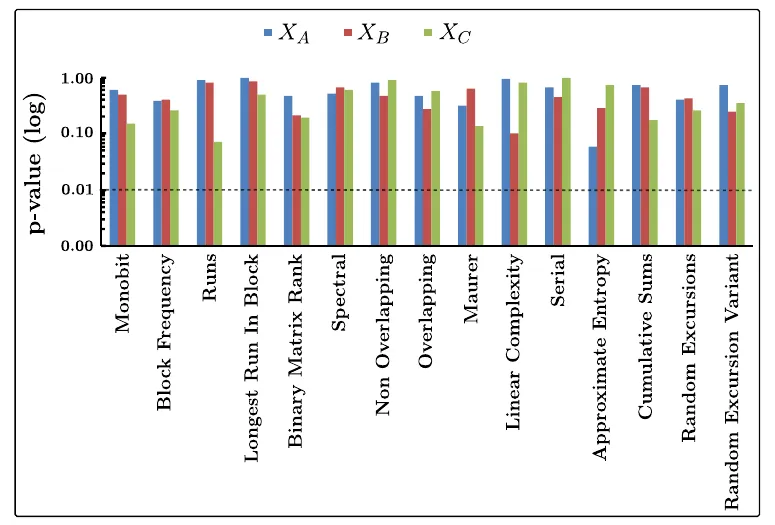
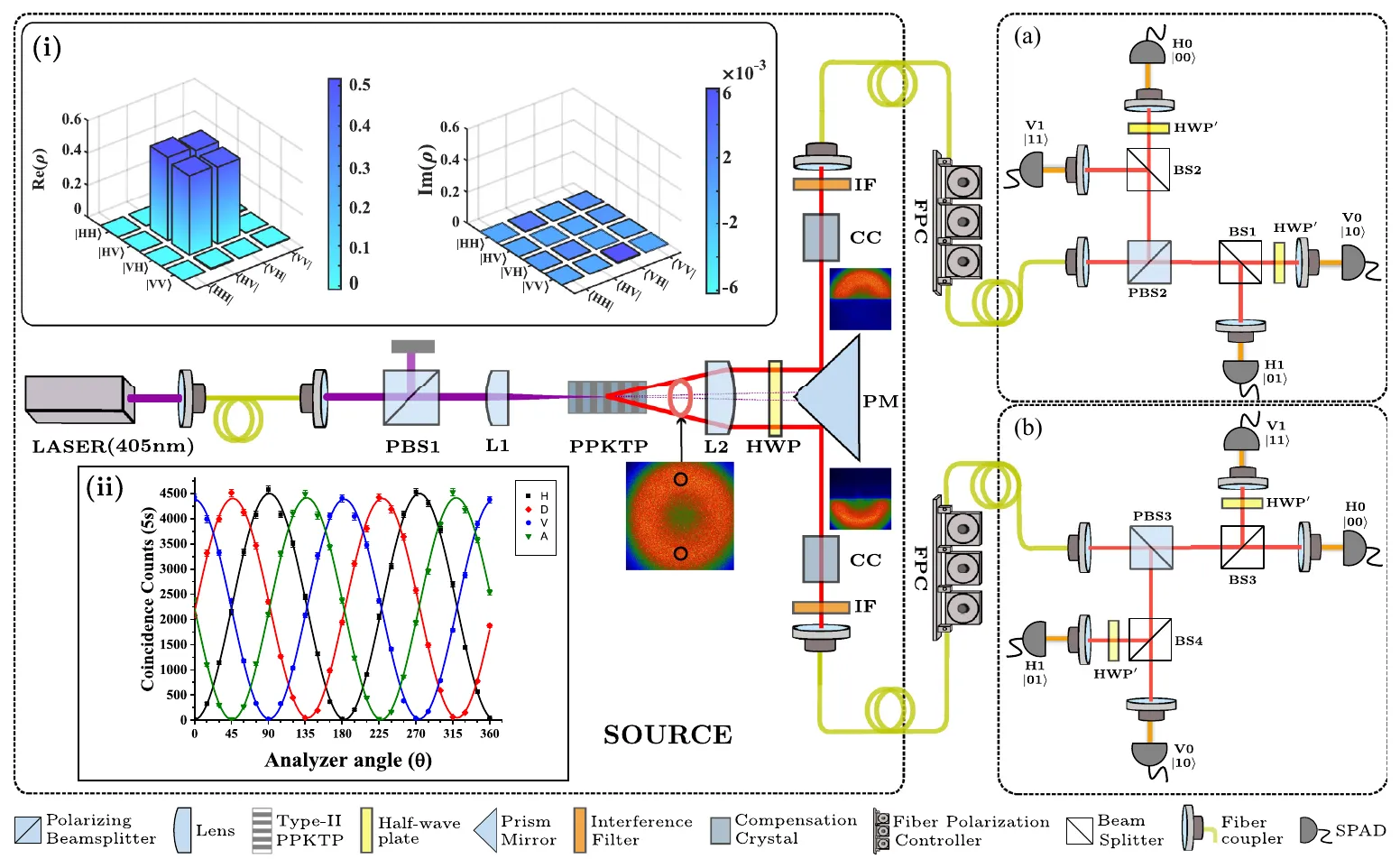
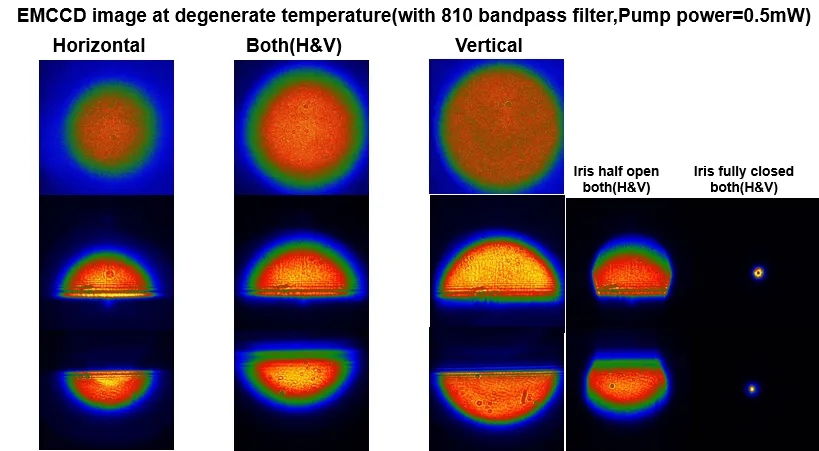
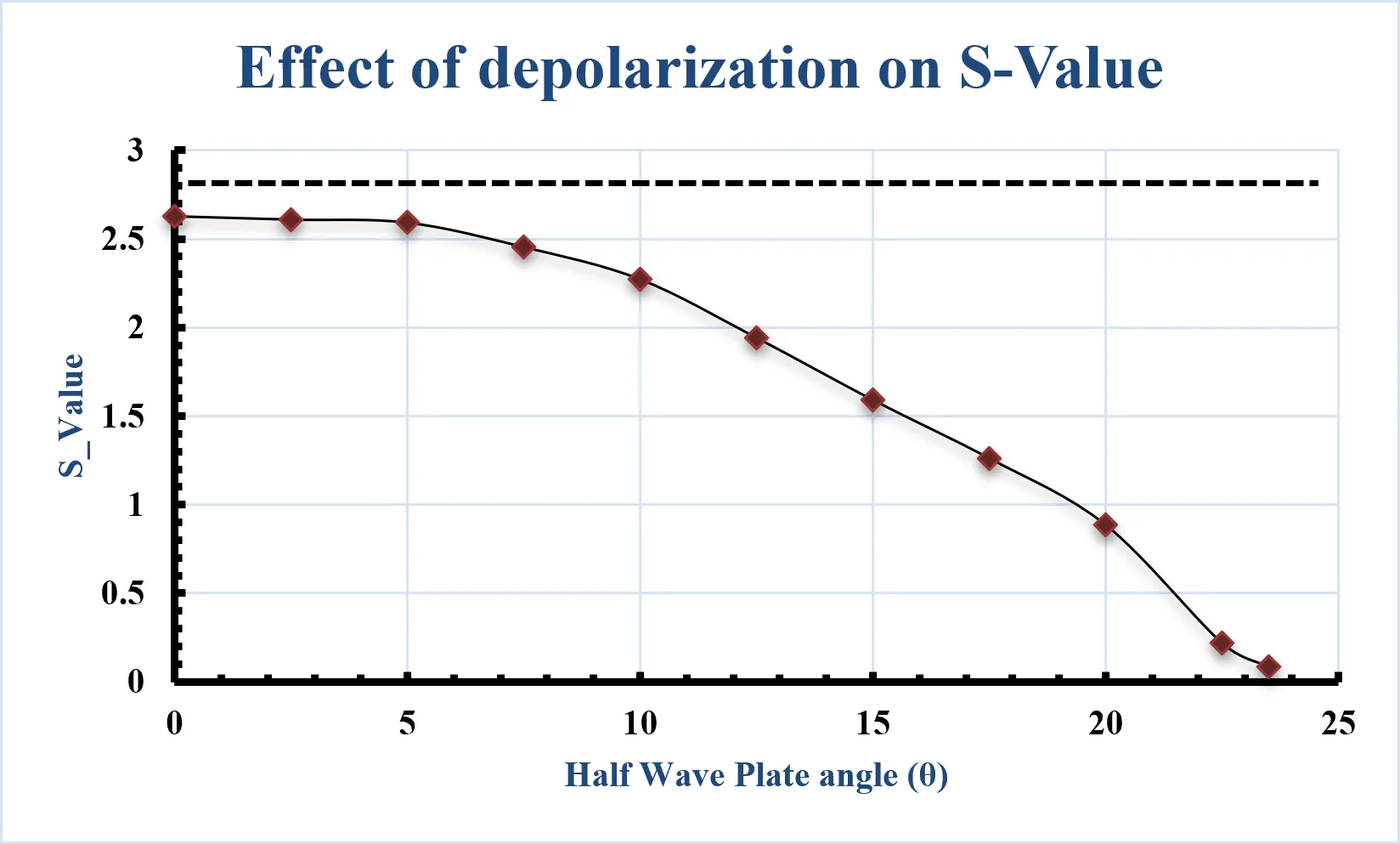
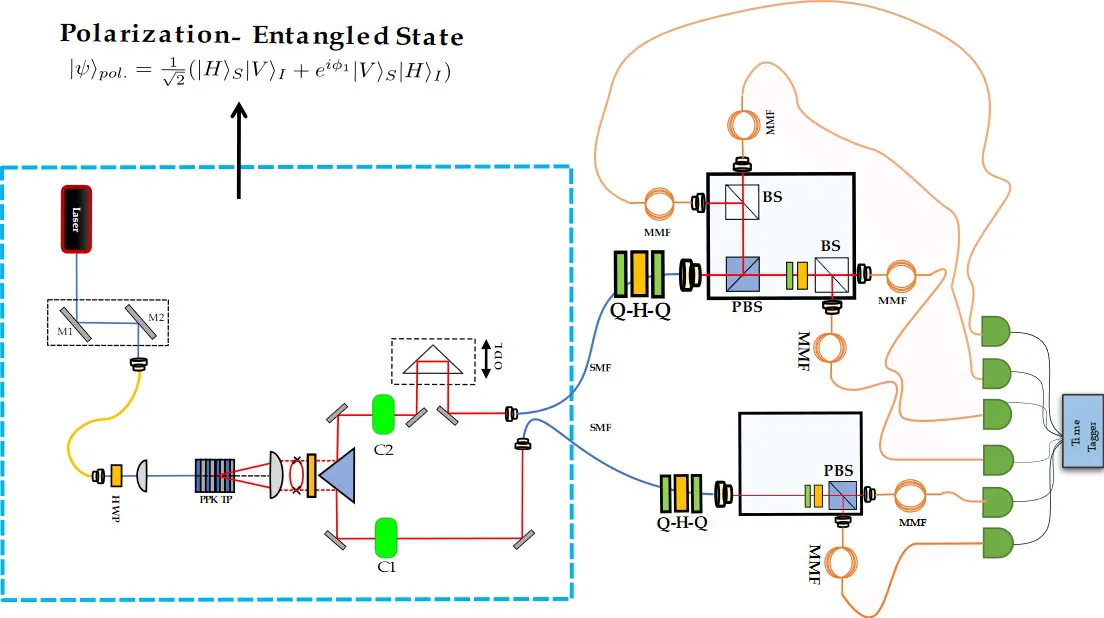
Characterising a Type-II PPKTP polarization-entangled source with a Bell test, visibility curves and tomography, then using it to generate random bits.
Computational · Sep 2024 – Apr 2025
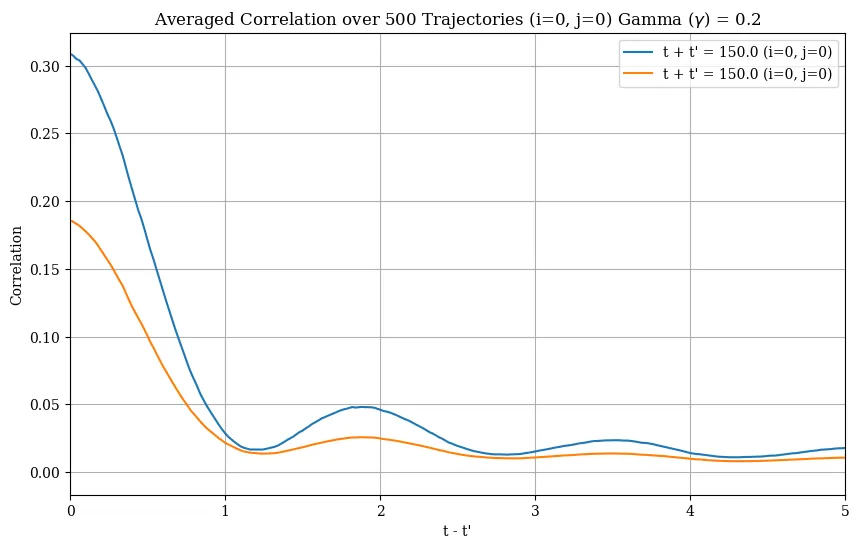
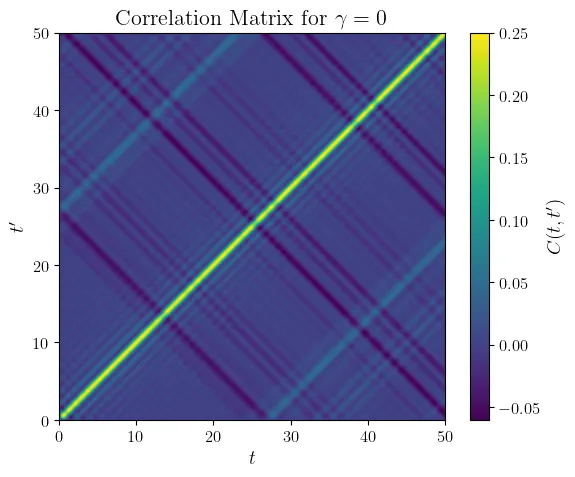
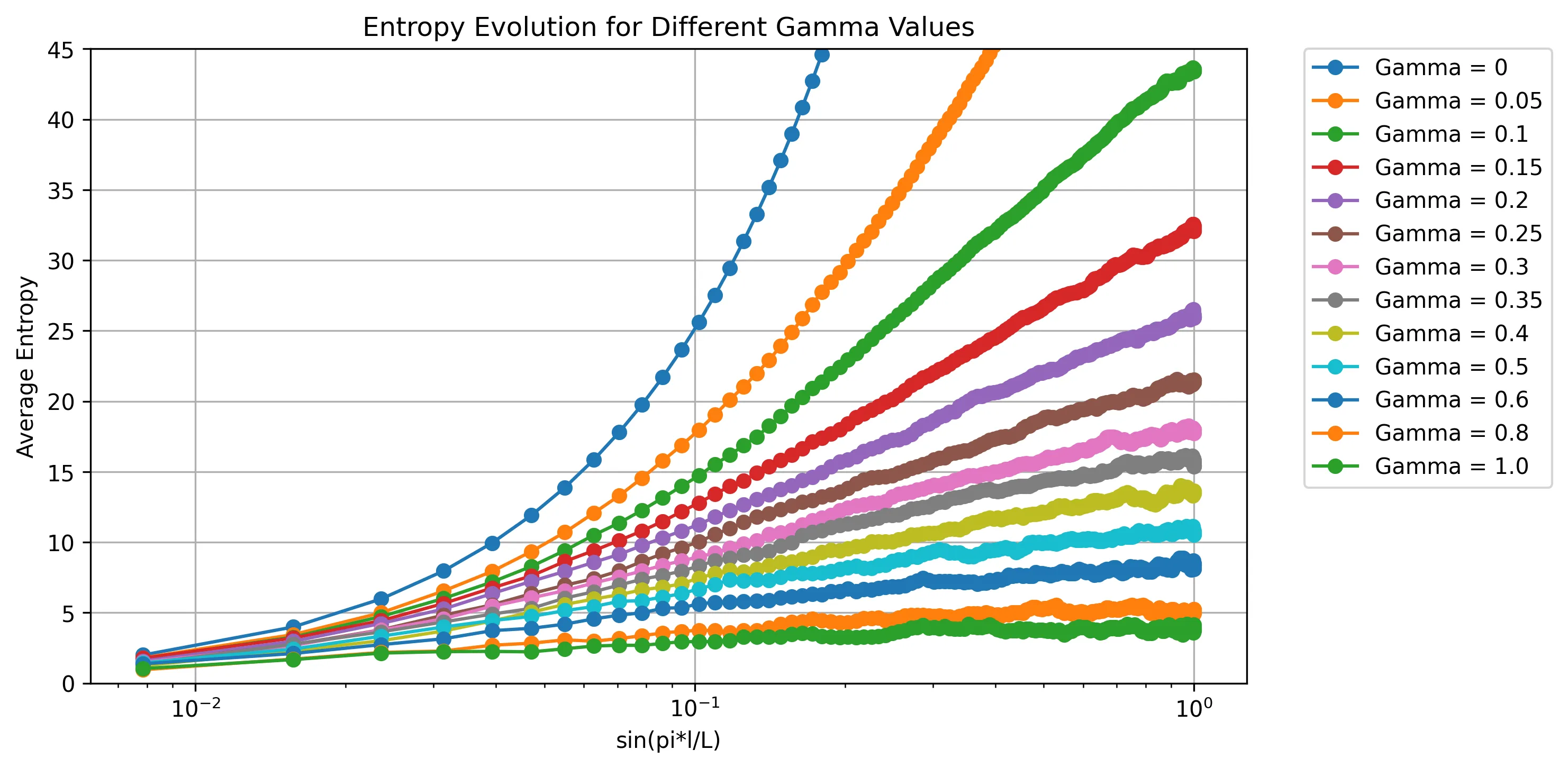
Quantum-trajectory simulations of a fermion chain under weak monitoring, tracking entanglement, correlations and response as measurement strength grows.
01
Fine-tuned t5-small on SAMSum chat dialogues with the Hugging Face Trainer and served it as a FastAPI web app with beam-search decoding.
Validation loss 0.381 → 0.350 over 6 epochs (4,000 training dialogues)
PyTorch, Hugging Face Transformers, FastAPI
02
Loads and chunks PDFs, embeds the chunks into a persistent vector store, retrieves the top matches for a query and passes them as context to an LLM.
LangChain, sentence-transformers, ChromaDB, Groq LLM
03
Feed-forward networks for date-fruit classification and power-plant output regression, a CNN on CIFAR-10 and an RNN for IMDB review sentiment.
Test accuracy 95.6% (ANN), 72.5% (CIFAR-10 CNN), 85.2% (RNN); R² 0.935 (ANN regression)
PyTorch, torchvision, NLTK
04
End-to-end classification pipelines for loan approval, health risk and purchase intent: preprocessing, feature engineering, model comparison and tuning.
Random Forest 93.8% accuracy (health risk); logistic regression F1 0.81 (loan approval)
scikit-learn, Pandas
05
KNN classification and regression, linear regression by gradient descent and least squares, and logistic regression, written in NumPy.
NumPy